Showing posts with label insect. Show all posts
Showing posts with label insect. Show all posts
Sunday, September 8, 2013
The Peacock Spider
The Peacock spider or Gliding spider (Maratus volans) is a species of jumping spider.
The species name means "flying" in Latin, because it was at first thought that the
flaps help the spider in gliding. The red, blue and black colored males have flap-like
extensions of the abdomen with white hairs that can be folded down. They are used
for display during mating: the male raises his abdomen, then expands and raises the
flaps so that the abdomen forms a white-fringed, circular field of color.

Thursday, May 2, 2013
Lygodium Spider Moth

This is the Lygodium Spider Moth (Siamusotima aranea). The species was
originally discovered in Thailand in 2005, but only recently described by
entomologists. It evolved with spider leg markings on its wings to fool
predators.
Monday, April 29, 2013
Miniature Paintings By Hasan Kale


Turkish painter Hasan Kale paints on every small object he finds. A needle,
a seed, a butterfly wing or a lump sugar turns into a canvas in his hands. He
paints Istanbul panoramas, the city which inspires him, on these small objects.
His art is inspired by Mohammed of the Black Pen’s brush technique and
Levni’s color harmony.
Friday, April 19, 2013


Thursday, March 7, 2013
Cordyceps Parasitic Fungus

This unfortunate arachnid is infected with Cordyceps, a parasitic fungus that
replaces its host's tissue with its own.
Cordyceps fungi invades its hosts (mainly arthropods), and its mycelium
eventually replaces the host's tissue. Once the arthropod is dead, cylindrical
or branching growths emerge from the creature's dead body. Some species
also have mind-control capabilities, convincing the host to travel to a place
where the fungus will find optimal growth conditions before the host dies.
Monday, February 11, 2013

Monday, January 7, 2013
Ogre-Faced Spider
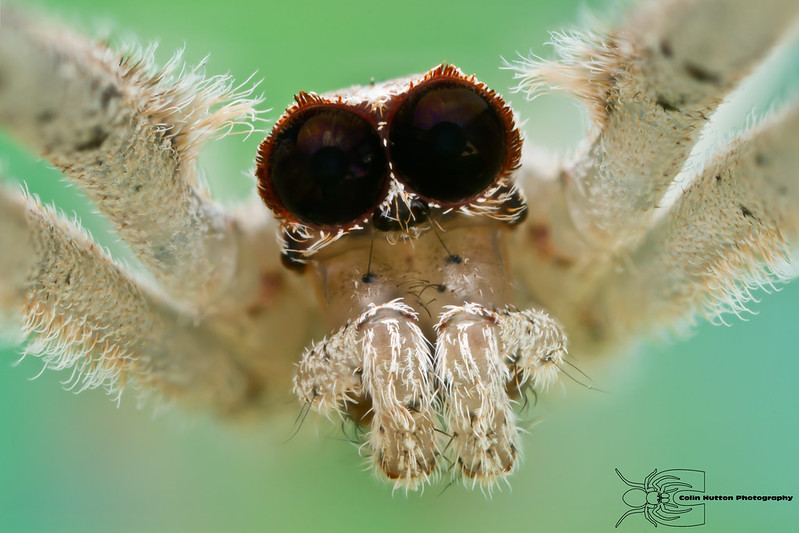

The spider family Deinopidae consists of stick-like elongate spiders that build
unusual webs that they suspend between the front legs. When prey approaches,
the spider will stretch the net to two or three times its relaxed size and propel
itself onto the prey, entangling it in the web. Because of this, they are also called
net-casting spiders.
Friday, November 30, 2012
Natural Selection Wins Again


A newly discovered Aphodiine Scarab from Cambodia is a stunning example
of how natural selection helps this termitophilic beetle adapt and find an easier
path to a meal.
The beetle not only tricks a colony of termites into granting it access to their
stock pile of food by reproducing the scent of that food themselves, it also
entices the termite to actually carry it directly to the food using the perfectly
sculpted handle on it's back.
Thursday, November 29, 2012
Hymenopus coronatus (Orchid Mantis)
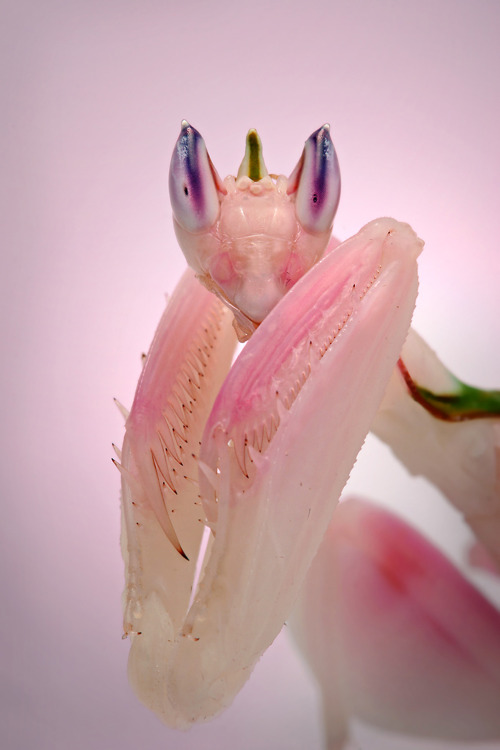
The Orchid Mantis is a mantis from Malaysia, Indonesian, and Sumatran rain forests.
This species is characterized by brilliant and beautiful coloring and unusual structure; their four walking legs resemble flower petals, and the coloration of the bodies tends to match the environment in which they were raised.
Source: Wikipedia
Thursday, November 22, 2012
Thursday, November 1, 2012
Friday, October 26, 2012
Finalists of Nikon's best microscope images of 2012
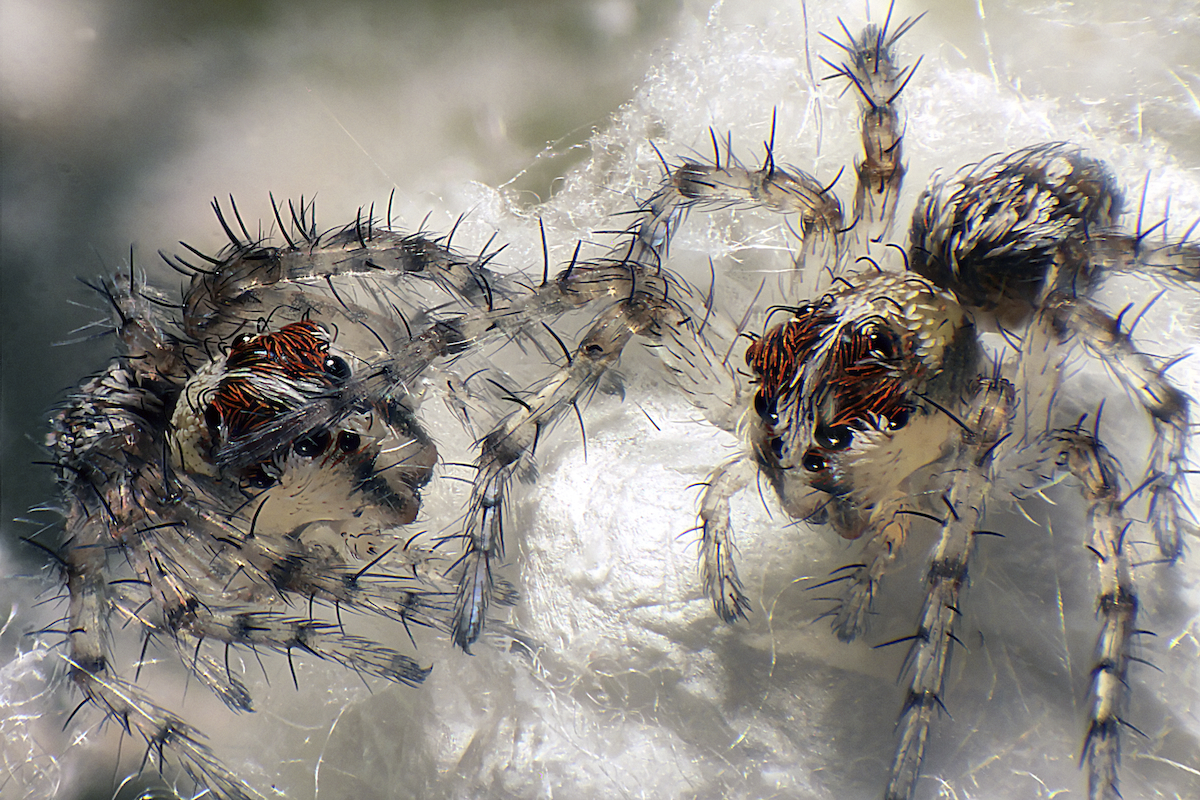
These recently hatched lynx spiders were imaged by Walter Piorkowski of South Beloit, Illinois.
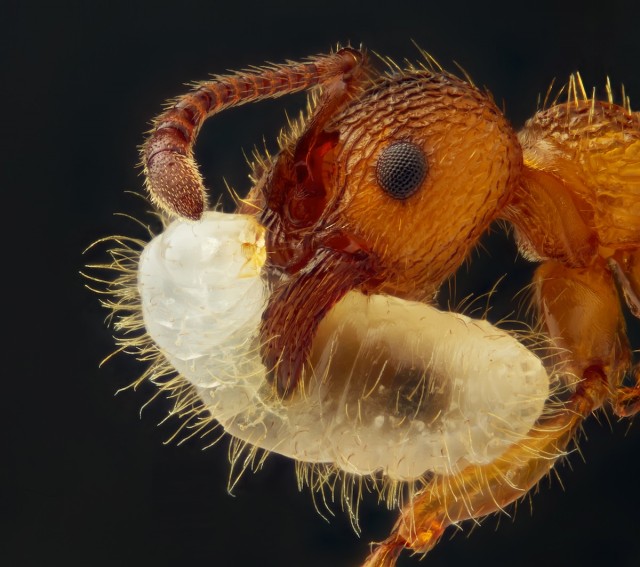
Geir Drange from Norway captured this ant carrying its larva.
More images found at: www.nikonsmallworld.com
Tuesday, October 16, 2012

The defenceless newborns sitting under the vicious sting are the scorpion's own
offspring, tended by their mother until they are big enough to survive on their own.
Unlike most other arachnids they are viviparous: rather than laying eggs they give
birth to live young. The juveniles are unable to feed or defend themselves, or
regulate their moisture levels - they need their mother's protection.
Source: www.newscientist.com
Phyllodes Imperialis
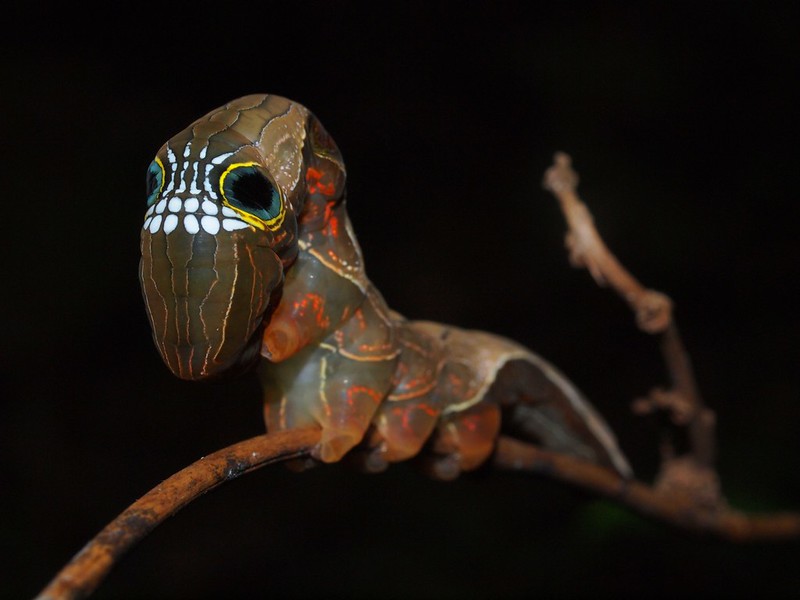
The caterpillar of the Imperial Fruit Sucking Moth (Phyllodes imperialis). The moth is of the Noctuidae family. The species can be found in north-eastern Queensland to northern New South Wales, Papua New Guinea, Solomons, Vanuatu and New Caledonia.
It's menacing head and intricate markings are meant to thwart would be predators. In it's adult incarnation, the moth has vibrant pink under-wings, but most significantly, an impressive cryptic design capacity to transform itself into a thoroughly convincing dead leaf.
Friday, September 28, 2012

Monday, September 17, 2012
Saturday, September 8, 2012


Friday, August 31, 2012
Infrared video shows bees "cooking" wasp invader
It's an unlikely way to deal with an intruder but some honeybees cook wasps that invade their colony. The tactic is usually invisible to the naked eye but now a new infrared video captured by Barrett Klein and colleagues from the University of Wuerzburg in Germany exposes the thermal assault involved.
The video, filmed through an observation window let into the wall of a hive, follows the bees as they mob the wasp. Then a close-up shows them generating heat by contracting their wing muscles to suffocate the intruder.
Friday, August 24, 2012


Subscribe to:
Posts (Atom)