Showing posts with label blue. Show all posts

Thursday, July 25, 2013

Nat Geo Amatuer Photo Contest Winner


Overall winner of the National Geographic Best Underwater Pictures 2013.
Check out the runner-ups here: Nationalgeographic.com/contest

Monday, February 11, 2013

Sunday, February 3, 2013

Worlds Shiniest Living Thing


These Pollia condensata berries are so colorful that they might have been picked
minutes ago. In fact, they were gathered in 1974. Found deep in the Ghana forest,
this tropical metre-tall herb sprouts its shiny berry-like fruits in clusters up to
40-strong. These little orbs are iridescent – they use special layers of cells, arranged
just so, to reflect colours with extraordinary intensity. This trick relies on the micro-
scopic physical structures of the cells, rather than on any chemical pigments. Indeed,
the fruits have no blue pigment at all. Like beetles and butterflies the color does not
degrade over time. Researchers say that P. condensata's blue is the most intense color
in the natural world.

Source: www.wired.com/best-science-imges-2012

Friday, February 1, 2013

Methane Trapped in Ice


Bubbles of methane trapped in frozen Abrams lake, Canada.

Photographer Fikret Onal explains, "The plants on the lake bed release methane
gas and methane gets frozen once coming close enough to much colder lake surface
and they keep stacking up below once the weather gets colder and colder during
the winter season."

Tuesday, November 20, 2012

Willow the White Whale


 An extremely rare white humpback whale was spotted recently near Norway. 
Welsh maritime engineer Dan Fisher made the startling discovery off the coast
 of Norway in August.  Fisher has dubbed him Willow the White Whale. 

Website Life’s Little Mysteries states: this is only the second known adult white
 humpback whale on the planet. The first is Migaloo, a humpback who’s made 
numerous cameos off Australia’s east coast. The whale’s name means
 “white fella” in Aboriginal, and he’s usually spotted as he makes his annual 
migration to Antarctic waters during the southern spring. 

While Migaloo is thought to be affected by albinism, a genetic condition that 
stifles melanin pigmentation, it’s possible his Norwegian counterpart is not 
albino, but leucistic. Leucism can affect pigments other than melanin and it 
doesn’t result in the pink eyes characteristic of albinism. Leucism can also 
leave an animal with splotches of colour.

Source: Twisted Sifter

Friday, August 24, 2012

Photographer David Fleetham


In the waters around the Galapagos Islands a hungry sea lion appears to swim
through a tunnel of fish as it searches for its supper.


A Great White Shark (Carcharodon carcharias) near the surface of the sea,
Guadalupe Island, Mexico.

Monday, July 30, 2012


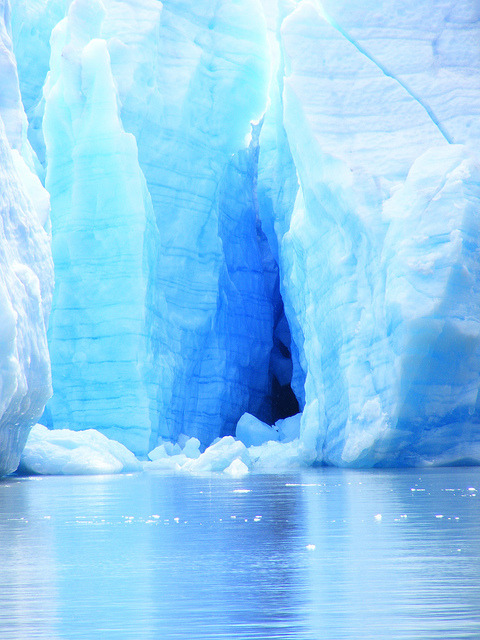
 "An iceberg twice the size of Manhattan tore off one of Greenland's largest glaciers, illustrating another dramatic change to the warming island.

For several years, scientists had been watching a long crack near the tip of the northerly Petermann Glacier. On Monday, NASA satellites showed it had broken completely, freeing an iceberg measuring 46 square miles.

A massive ice sheet covers about four-fifths of Greenland. Petermann Glacier is mostly on land, but a segment sticks out over water like a frozen tongue, and that's where the break occurred.

Many of Greenland's southern glaciers have been melting at an unusually rapid pace. The Petermann break brings large ice loss much farther north than in the past, said Ted Scambos, lead scientist at the National Snow and Ice Data Center in Boulder, Colorado."

 Read more: http://www.foxnews.com/scitech/2012/07/18/glacier-twice-as-big-as-manhattan-snaps-off-greenland-ice-sheet/#ixzz227alOwY4

Tuesday, June 26, 2012

Monday, April 9, 2012

Thursday, March 22, 2012