Friday, October 26, 2012

Finalists of Nikon's best microscope images of 2012


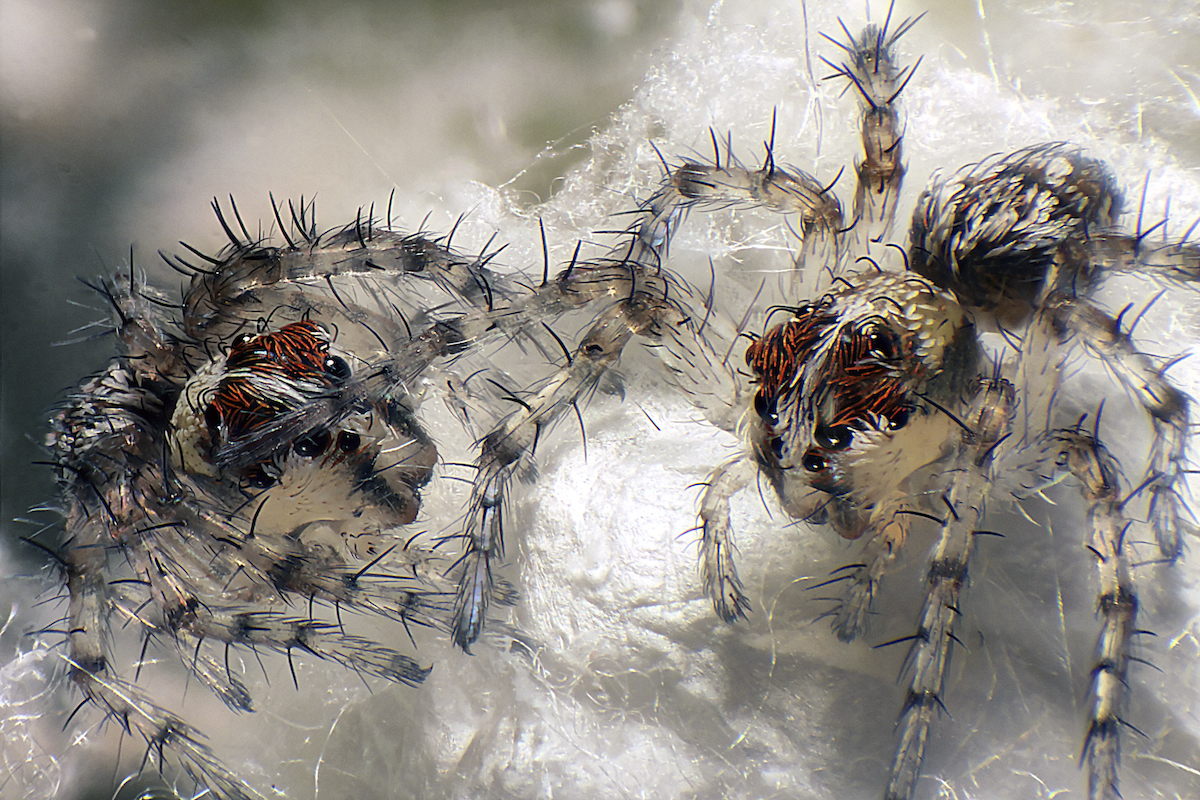
These recently hatched lynx spiders were imaged by Walter Piorkowski of South Beloit, Illinois.

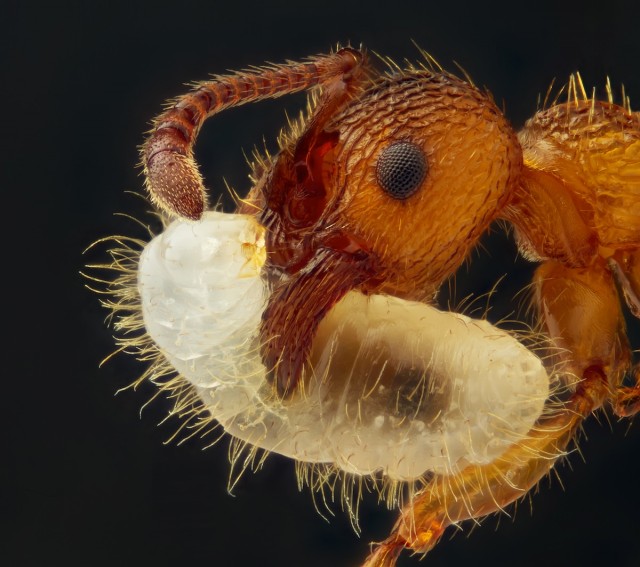
Geir Drange from Norway captured this ant carrying its larva.

 More images found at: www.nikonsmallworld.com

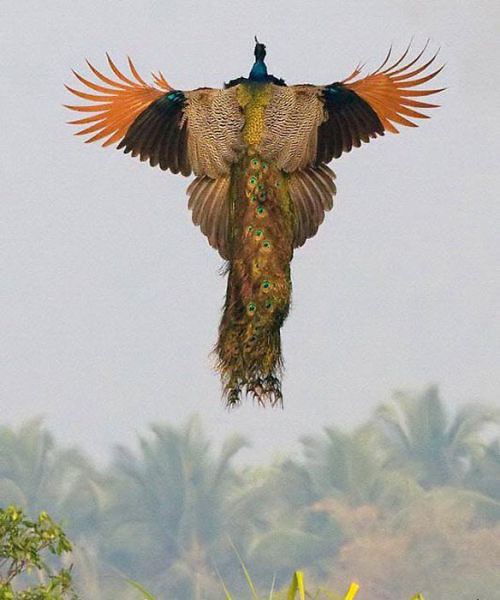
Dinosaurs Developed Feathers To Attract Mates, Not Fly


 In news that shouldn't surprise anyone who finds them so irresistible, paleontologists are now claiming that the earliest dinosaurs to develop feathers did so for courtship purposes and not to soar like giant, sexy eagles.

"They may have initially evolved as a secondary sexual characteristic," says a paper published Thursday in the prestigious journal Science.

 "Because they're in these large dinosaurs, (wings) haven't evolved for flight," Zelenitsky says. "(And) because these wing-like structures develop later in life, that suggests they were used for purposes like display or courtship or egg-brooding."

Wednesday, October 24, 2012

Monday, October 22, 2012

Coconut Octopus


 Amphioctopus marginatus, also known as the "coconut octopus" or "veined octopus",
 is a medium-sized cephalopod belonging to the genus Amphioctopus. It is found in
tropical waters of the western Pacific Ocean. It commonly preys upon shrimp, crabs,
and clams, and displays unusual behaviour, including bipedal walking and gathering
and using coconut shells and seashells for shelter. Source: Wikipedia

The main body of the octopus is typically around 8 centimeters (3 in) in size, and, with
 arms, approximately 15 centimeters (6 in) long. In this amazing capture by photographer
 Mario Neumann, the contrast of the white suckers to the rest of the octopus and sea
floor makes it look like some kind of alien spaceship.

Tuesday, October 16, 2012


The defenceless newborns sitting under the vicious sting are the scorpion's own
offspring, tended by their mother until they are big enough to survive on their own.

Unlike most other arachnids they are viviparous: rather than laying eggs they give
birth to live young. The juveniles are unable to feed or defend themselves, or
regulate their moisture levels - they need their mother's protection.

Source: www.newscientist.com

Phyllodes Imperialis


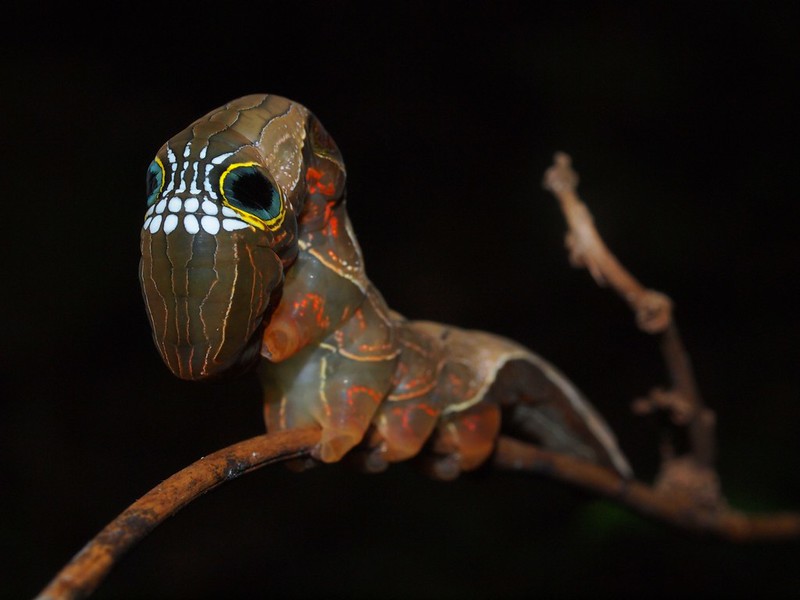
The caterpillar of the Imperial Fruit Sucking Moth (Phyllodes imperialis). The moth is of the Noctuidae family. The species can be found in north-eastern Queensland to northern New South Wales, Papua New Guinea, Solomons, Vanuatu and New Caledonia.

 It's menacing head and intricate markings are meant to thwart would be predators. In it's adult incarnation, the moth has vibrant pink under-wings, but most significantly, an impressive cryptic design capacity to transform itself into a thoroughly convincing dead leaf.

Wednesday, October 10, 2012


"Fingal's Cave is a sea cave on the uninhabited island of Staffa, in the Inner Hebrides of Scotland, part of a National Nature Reserve owned by the National Trust for Scotland. It is formed entirely from hexagonally jointed basalt columns within a Paleocene lava flow.

 Cooling on the upper and lower surfaces of the solidified lava resulted in contraction and fracturing, starting in a blocky tetragonal pattern and transitioning to a regular hexagonal fracture pattern with fractures perpendicular to the cooling surfaces. As cooling continued these cracks gradually extended toward the centre of the flow, forming the long hexagonal columns we see in the wave eroded cross-section today. Similar hexagonal fracture patterns are found in desiccation cracks in mud where contraction is due to loss of water instead of cooling."

From: Wikipedia.org

Friday, September 28, 2012

Lionesses in South Africa


Taken at the Motswari Private Game Reserve in South Africa, we see two lionesses having a drink at a watering hole. On the right is a rare white lion from the Xakubasa Pride. The photograph was taken by the park’s ranger Chad Cocking.

Open to the Kruger National Park and playing host to Africa’s Big Five, the family-owned and operated Motswari Private Game Reserve is one of South Africa’s jewels nestled within the Timbavati Nature Reserve.

Giant Leopard Moth

Monday, September 24, 2012

Bleeding Tooth Fungus


The Bleeding Tooth fungus, or Hydnellum pecki, is found in pine forests of the
American Pacific northwest and central Europe. It's also known by the names
'Devil's Tooth' or 'Strawberries and Creme'. Ironically, their oozing 'blood' actually
contains an anticoagulant called atromentrin.

Friday, September 21, 2012

Blue Footed Booby


 The Blue-footed Booby (Sula nebouxii) is a bird in the Sulidae family which comprises ten species of long-winged seabirds. The natural breeding habitat of the Blue-footed Booby is tropical and subtropical islands of the Pacific Ocean, most famously, the Galápagos Islands, Ecuador.

The courtship of the Blue-footed Booby consists of the male flaunting his blue feet and dancing to impress the female. During the dance, the male will spread his wings and stamp his feet on the ground.

Photo from: National Geographic

Wednesday, September 12, 2012

Tuesday, September 11, 2012

Hermit Crab Shells


The shells that hermit crabs seek are made by marine gastropods that secrete 
calcium carbonate from their mantel—the organ that covers their soft bodies. 
The shell is built up in deposits until the calcium carbonate becomes a crystalline
 structure held together via thin membranes of organic material. The univalve-type
 shells that hermit crabs prefer to adopt are spiral in shape. This formation 
affords the growing gastropod within the hard shell an ever-increasing area in
 which to expand.

 Hermit crabs are scavengers and often locate these borrowed dwellings by 
smell, when the original gastropod inhabitant dies and begins to decay. Once
 a hermit crab adopts a shell, it will keep it until the shell is outgrown, carrying 
it continuously as a shield, wherever it goes. In order to carry its home, one of 
the crab's front claws is completely dedicated to clutching the shell. This claw 
bends backward and holds on to the spool of calcium carbonate at the shell's 
center. In order to move, the animal must first use this claw to lift the shell and
 heave it onto its back. In spite of such difficulties, the drive to remain housed 
is so strong in this species that a typical hermit crab would rather be torn limb 
from limb than be pulled out of its shell. The only time that the animal will 
willingly leave its shell is a) if it locates another, more suitable one, or b) if it
 is shedding its exoskeleton—a process which can only be accomplished by 
fully exiting its dwelling just long enough to wriggle out of its own exfoliated 
shell casing.

When a hermit crab that has grown too large for its current home locates a new
 one, it determines the structure's suitability via a process called fondling. During
 this activity, the hermit crab will explore the shell's surface and its internal 
volume-to-weight ratio by rolling the shell over and gently rocking it back and
 forth. Since hermit crabs actually choose the shells that they inhabit, there is a 
large body of information concerning shell selection.

Source: www.cabinetmagazine.com