Thursday, May 2, 2013

Lygodium Spider Moth


This is the Lygodium Spider Moth (Siamusotima aranea). The species was
originally discovered in Thailand in 2005, but only recently described by
entomologists. It evolved with spider leg markings on its wings to fool
predators.

Monday, April 29, 2013

Miniature Paintings By Hasan Kale


Turkish painter Hasan Kale paints on every small object he finds. A needle,
a seed, a butterfly wing or a lump sugar turns into a canvas in his hands. He
paints Istanbul panoramas, the city which inspires him, on these small objects.
His art is inspired by Mohammed of the Black Pen’s brush technique and
Levni’s color harmony.

Friday, April 12, 2013

Monday, March 11, 2013

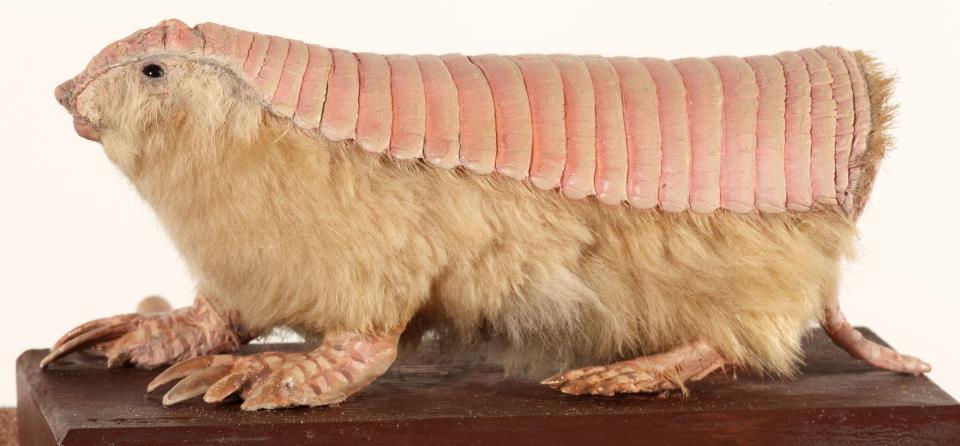
Pink Fairy Armadillo

 
The pink fairy armadillo (Chlamyphorus truncatus) or pichiciego is the smallest species of armadillo (mammals of the family Dasypodidae, mostly known for having a bony armor shell). It is found in central Argentina, where it inhabits dry grasslands and sandy plains with thorn bushes and cacti.

It is a nocturnal animal. It burrows small holes near ant colonies in dry soil, and feeds mainly on ants and ant larvae near its burrow. Occasionally, it feeds on worms, snails, insects and larvae, or various plant and root material.

The pink fairy armadillo spends much of its time under the ground, as it is a "sand swimmer" similar to the golden mole or the marsupial mole. It uses large front claws to agitate the sand, allowing it to almost swim through the ground like it is water. It is torpedo-shaped, and has a shielded head and back.

Source: wikipedia.com

Sunday, March 10, 2013

Thursday, March 7, 2013

Cordyceps Parasitic Fungus


This unfortunate arachnid is infected with Cordyceps, a parasitic fungus that
replaces its host's tissue with its own.

Cordyceps fungi invades its hosts (mainly arthropods), and its mycelium
eventually replaces the host's tissue. Once the arthropod is dead, cylindrical
or branching growths emerge from the creature's dead body. Some species
also have mind-control capabilities, convincing the host to travel to a place
where the fungus will find optimal growth conditions before the host dies.

Monday, February 11, 2013

Thursday, February 7, 2013

Sunday, February 3, 2013

Worlds Shiniest Living Thing


These Pollia condensata berries are so colorful that they might have been picked
minutes ago. In fact, they were gathered in 1974. Found deep in the Ghana forest,
this tropical metre-tall herb sprouts its shiny berry-like fruits in clusters up to
40-strong. These little orbs are iridescent – they use special layers of cells, arranged
just so, to reflect colours with extraordinary intensity. This trick relies on the micro-
scopic physical structures of the cells, rather than on any chemical pigments. Indeed,
the fruits have no blue pigment at all. Like beetles and butterflies the color does not
degrade over time. Researchers say that P. condensata's blue is the most intense color
in the natural world.

Source: www.wired.com/best-science-imges-2012

Friday, February 1, 2013

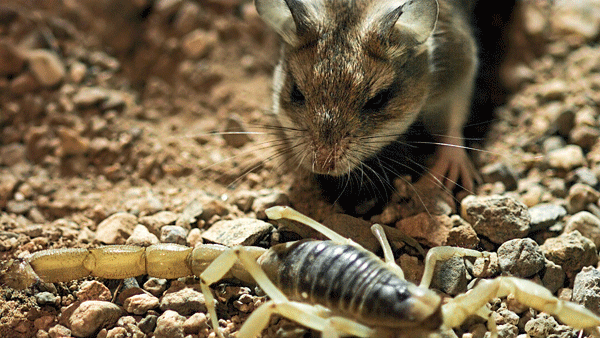
Carnivorous Grasshopper Mouse


 It's the southern grasshopper mouse (Onychomys torridus), the only carnivorous
mouse in North America. Its unique biology and resistance to scorpion venom
may one day help researchers treat human pain disorders. But for now, it's just after blood.
Its behavior is rather distinct from other mice. It is a carnivorous rodent, dining
on insects (such as grasshoppers), worms, scorpions, snakes, and even other mice.
It also stalks its prey in the manner of a cat sneaking up quietly, and defends its
territory by "howling" like a small wolf.

Source: www.newscientist.com

Methane Trapped in Ice


Bubbles of methane trapped in frozen Abrams lake, Canada.

Photographer Fikret Onal explains, "The plants on the lake bed release methane
gas and methane gets frozen once coming close enough to much colder lake surface
and they keep stacking up below once the weather gets colder and colder during
the winter season."

Monday, January 28, 2013

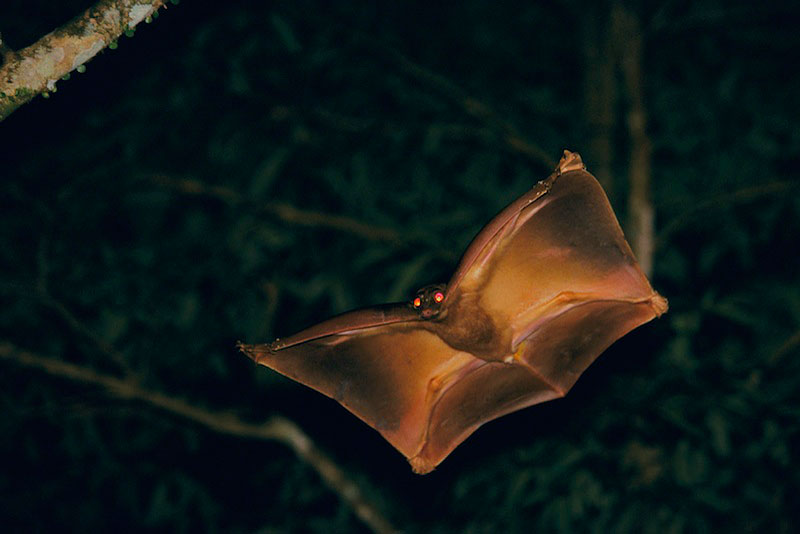
Colugos


Colugos are arboreal gliding mammals found in South-east Asia. There are just
two extant species, which make up the entire family Cynocephalidae and order
Dermoptera. They are the most capable of all gliding mammals, using flaps of
extra skin between their legs to glide from higher to lower locations.
They are also known as cobegos or flying lemurs, though they are not true lemurs.

Colugos were traditionally considered being close to the ancestors of bats, but
are now seen by some as the closest living relatives to primates.