Monday, January 28, 2013

Pen-tailed Tree Shrew Likes the Sauce


Malaysia's pen-tailed tree shrew (above) regularly drinks fermented palm "beer,"
which in turn helps pollinate the palms' flowers, scientists reported in July 2008.

The pen-tailed tree shrew is the first non-human mammal known to display
alcoholic behavior. What's more, the rat-size animal never gets drunk during
its nonstop jungle jamborees.

Since the tiny mammal is related to primate ancestors, the find also suggests humans'
taste for alcohol may have begun well before the believed advent of brewing about
9,000 years ago.

Source: http://news.nationalgeographic.com/news/bigphotos/30498685.html

Friday, January 18, 2013

Monday, January 7, 2013

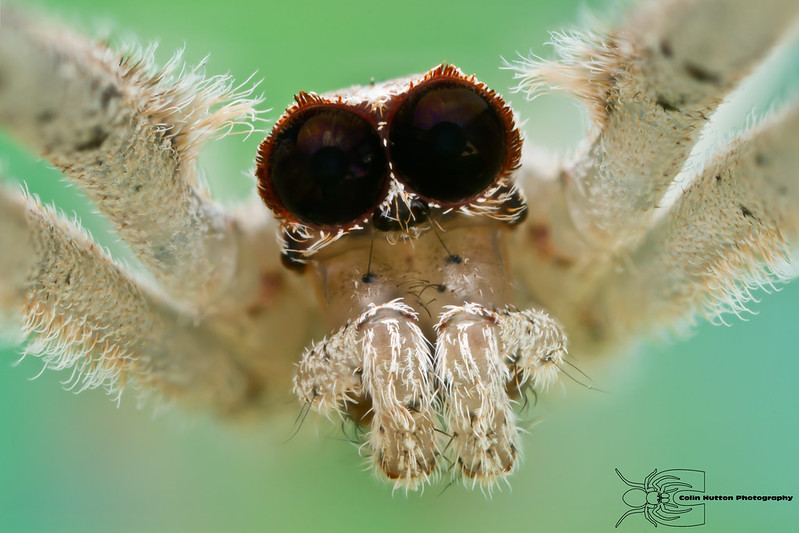
Ogre-Faced Spider


The spider family Deinopidae consists of stick-like elongate spiders that build
unusual webs that they suspend between the front legs. When prey approaches,
the spider will stretch the net to two or three times its relaxed size and propel
itself onto the prey, entangling it in the web. Because of this, they are also called
net-casting spiders.

Wednesday, January 2, 2013

A Star-Nosed Mole’s Nose


The star-nosed mole is easily identified by the 11 pairs of pink fleshy
appendages ringing its snout, which is used as a touch organ with more
than 25,000 minute sensory receptors, known as Eimer's organs, with
which this hamster-sized mole feels its way around. With the help of
its Eimer's organs, it may be perfectly poised to detect seismic wave
vibrations. Because the star-nosed mole is functionally blind, the snout
was long suspected to be used to detect electrical activity in prey
animals, though little, if any, empirical support has been found for
this hypothesis.

These moles also possess the ability to smell underwater, accomplished
by exhaling air bubbles onto objects or scent trails and then inhaling the
bubbles to carry scents back through the nose.

Photo by Kenneth Catania, National Geographic, October 2009

Friday, December 28, 2012


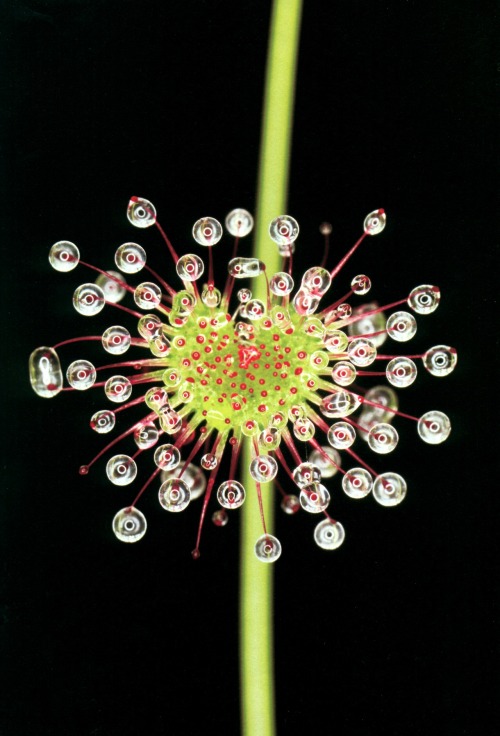
The Australian sundew plant uses its sticky “dewdrops” to attract and trap the
insects that are its food.

Photo by Helene Schmitz, March 2010 National Geographic

Wednesday, December 26, 2012

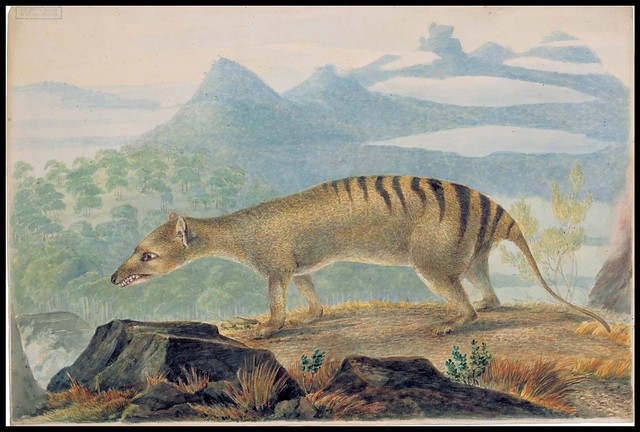
Tasmanian Tiger


 Thylacinus cynocephalus, Greek for "dog-headed pouched one", was the largest
 known carnivorous marsupial of modern times. It is commonly known as the
Tasmanian tiger (because of its striped back) or the Tasmanian wolf. Native to
continental Australia, Tasmania and New Guinea, it is thought to have become
extinct in the 20th century. It was the last extant member of its family, Thylacinidae;
specimens of other members of the family have been found in the fossil record
dating back to the early Miocene.

Despite its official classification as extinct, sightings are still reported, though none
has been conclusively proven. The thylacine was one of only two marsupials to have
a pouch in both sexes (the other being the water opossum). The male thylacine had
a pouch that acted as a protective sheath, covering the male's external reproductive
organs while he ran through thick brush. It has been described as a formidable predator
because of its ability to survive and hunt prey in extremely sparsely populated areas.
 
Source: http://en.wikipedia.org/wiki/Thylacine

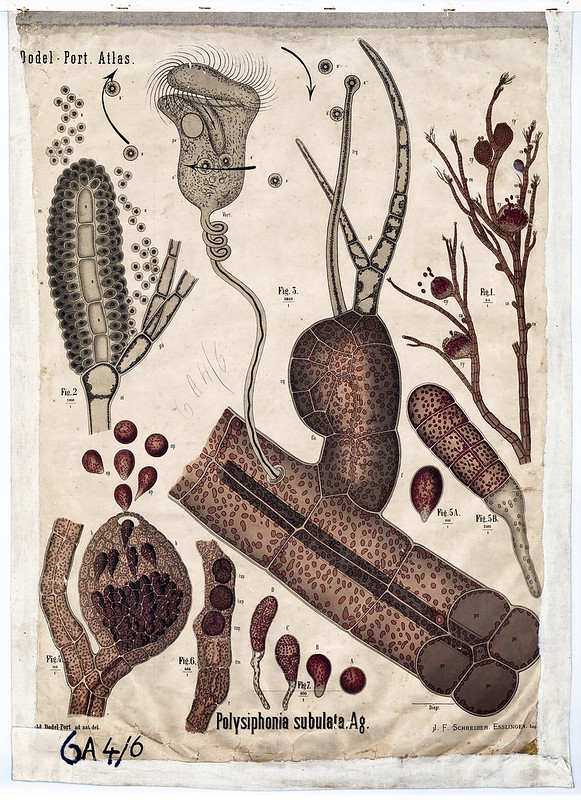
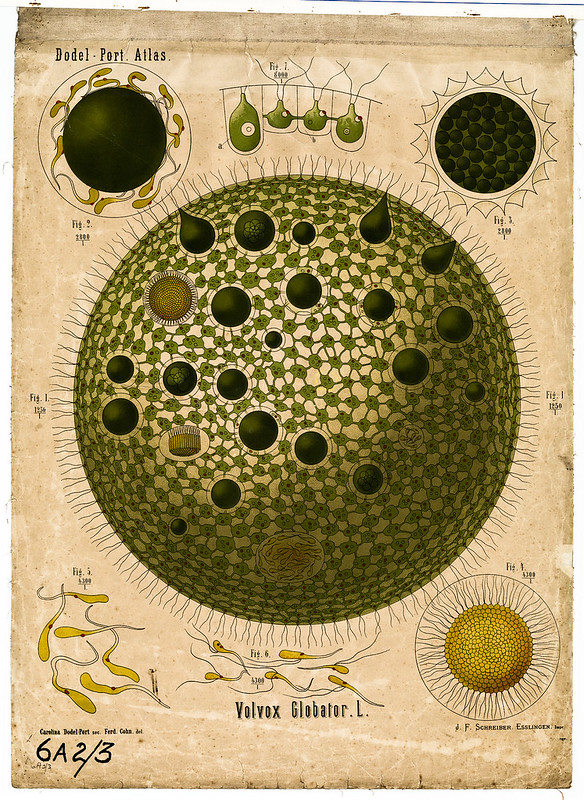
Plant Systematics Wall Chart Circa 1878


Polysiphonia Subulata (red algae genus)

This shows the freshwater green alga Volvox globator. Many individual cells
 live together forming a beautiful spherical colony. Some of them are specialized
for reproduction.

"Living nature is the best teacher and pedagogue; an artistic medium of
representation tries to replace nature and this can be possible in practice only
 if the images are true to natural objects."

Source: http://bibliodyssey.blogspot.com/

Thursday, December 13, 2012


Perth Zoo has managed to breed two baby echidnas (known as puggles). Only
24 puggles have been successfully born in captivity, and these new-borns
represent the first successful breeding of zoo born echidnas. Breeding echnidnas
is notoriously difficult so the information gathered from these infants as they
grow will be vital in learning more about the reproduction of this species.

Monday, December 10, 2012

Sunday, December 2, 2012


Artwork by Ben Giles.

Friday, November 30, 2012

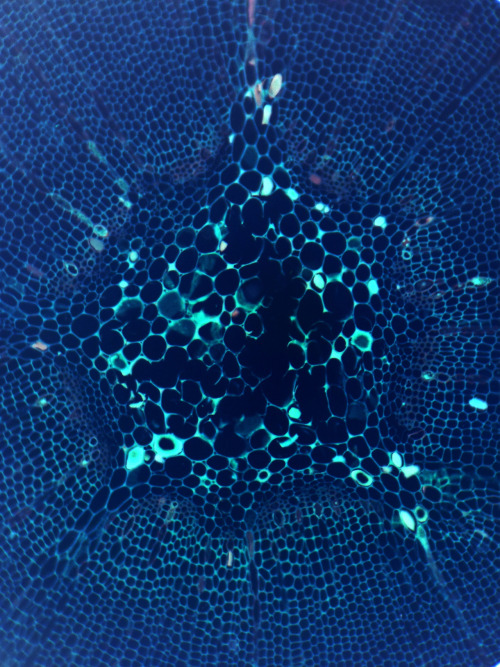
The Stem of a Pine Tree

Natural Selection Wins Again


A newly discovered Aphodiine Scarab from Cambodia is a stunning example
of how natural selection helps this termitophilic beetle adapt and find an easier
path to a meal.

The beetle not only tricks a colony of termites into granting it access to their
 stock pile of food by reproducing the scent of that food themselves, it also
 entices the termite to actually carry it directly to the food using the perfectly
sculpted handle on it's back.

Thursday, November 29, 2012

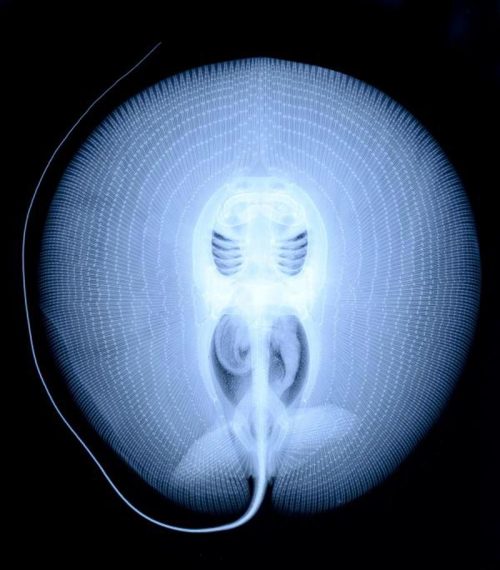
X-ray of a Stingray

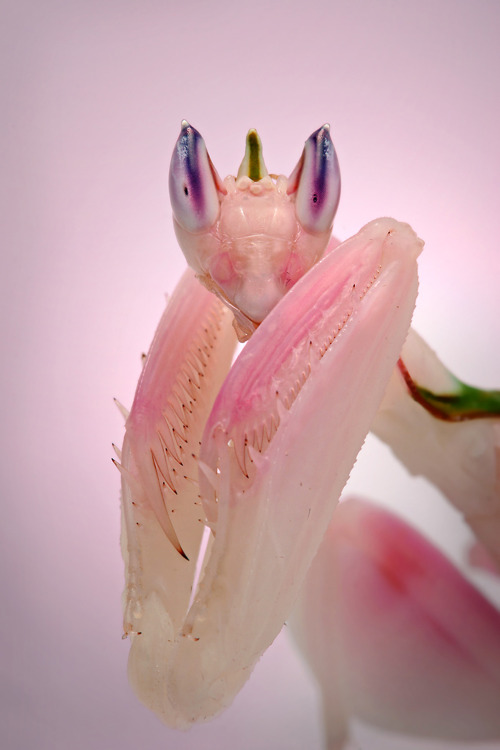
Hymenopus coronatus (Orchid Mantis)


The Orchid Mantis is a mantis from Malaysia, Indonesian, and Sumatran rain forests.

This species is characterized by brilliant and beautiful coloring and unusual structure; their four walking legs resemble flower petals, and the coloration of the bodies tends to match the environment in which they were raised.

Source: Wikipedia

Darwin’s Frog

Photobucket
The male Darwin’s frog broods tadpoles in its mouth. They tend to get frisky
as children often do. He carries them around until they develop into froglets
and hop out of his mouth.