
Monday, February 11, 2013

Thursday, February 7, 2013
Sunday, February 3, 2013
Worlds Shiniest Living Thing

These Pollia condensata berries are so colorful that they might have been picked
minutes ago. In fact, they were gathered in 1974. Found deep in the Ghana forest,
this tropical metre-tall herb sprouts its shiny berry-like fruits in clusters up to
40-strong. These little orbs are iridescent – they use special layers of cells, arranged
just so, to reflect colours with extraordinary intensity. This trick relies on the micro-
scopic physical structures of the cells, rather than on any chemical pigments. Indeed,
the fruits have no blue pigment at all. Like beetles and butterflies the color does not
degrade over time. Researchers say that P. condensata's blue is the most intense color
in the natural world.
Source: www.wired.com/best-science-imges-2012
Friday, February 1, 2013
Carnivorous Grasshopper Mouse
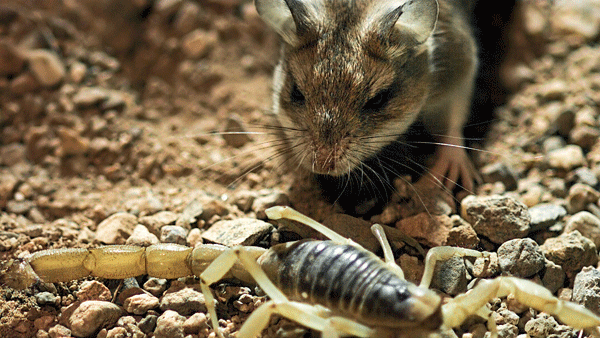
It's the southern grasshopper mouse (Onychomys torridus), the only carnivorous
mouse in North America. Its unique biology and resistance to scorpion venom
may one day help researchers treat human pain disorders. But for now, it's just after blood.
Its behavior is rather distinct from other mice. It is a carnivorous rodent, dining
on insects (such as grasshoppers), worms, scorpions, snakes, and even other mice.
It also stalks its prey in the manner of a cat sneaking up quietly, and defends its
territory by "howling" like a small wolf.
Source: www.newscientist.com
Methane Trapped in Ice

Bubbles of methane trapped in frozen Abrams lake, Canada.
Photographer Fikret Onal explains, "The plants on the lake bed release methane
gas and methane gets frozen once coming close enough to much colder lake surface
and they keep stacking up below once the weather gets colder and colder during
the winter season."
Monday, January 28, 2013
Colugos

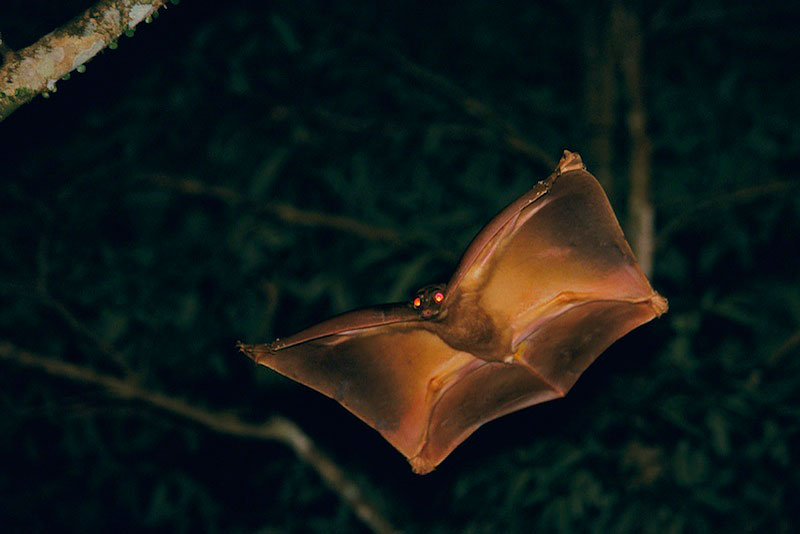
Colugos are arboreal gliding mammals found in South-east Asia. There are just
two extant species, which make up the entire family Cynocephalidae and order
Dermoptera. They are the most capable of all gliding mammals, using flaps of
extra skin between their legs to glide from higher to lower locations.
They are also known as cobegos or flying lemurs, though they are not true lemurs.
Colugos were traditionally considered being close to the ancestors of bats, but
are now seen by some as the closest living relatives to primates.
Pen-tailed Tree Shrew Likes the Sauce

Malaysia's pen-tailed tree shrew (above) regularly drinks fermented palm "beer,"
which in turn helps pollinate the palms' flowers, scientists reported in July 2008.
The pen-tailed tree shrew is the first non-human mammal known to display
alcoholic behavior. What's more, the rat-size animal never gets drunk during
its nonstop jungle jamborees.
Since the tiny mammal is related to primate ancestors, the find also suggests humans'
taste for alcohol may have begun well before the believed advent of brewing about
9,000 years ago.
Source: http://news.nationalgeographic.com/news/bigphotos/30498685.html
Friday, January 18, 2013
Monday, January 7, 2013
Ogre-Faced Spider
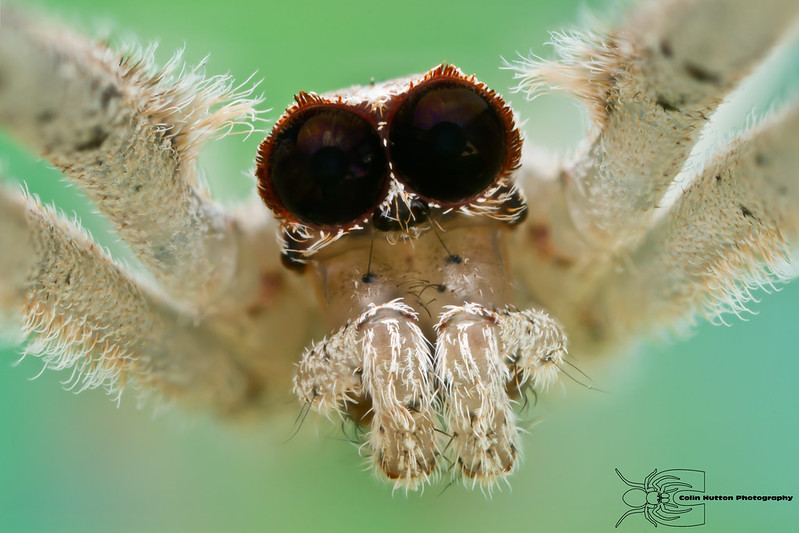

The spider family Deinopidae consists of stick-like elongate spiders that build
unusual webs that they suspend between the front legs. When prey approaches,
the spider will stretch the net to two or three times its relaxed size and propel
itself onto the prey, entangling it in the web. Because of this, they are also called
net-casting spiders.
Wednesday, January 2, 2013
A Star-Nosed Mole’s Nose

The star-nosed mole is easily identified by the 11 pairs of pink fleshy
appendages ringing its snout, which is used as a touch organ with more
than 25,000 minute sensory receptors, known as Eimer's organs, with
which this hamster-sized mole feels its way around. With the help of
its Eimer's organs, it may be perfectly poised to detect seismic wave
vibrations. Because the star-nosed mole is functionally blind, the snout
was long suspected to be used to detect electrical activity in prey
animals, though little, if any, empirical support has been found for
this hypothesis.
These moles also possess the ability to smell underwater, accomplished
by exhaling air bubbles onto objects or scent trails and then inhaling the
bubbles to carry scents back through the nose.
Photo by Kenneth Catania, National Geographic, October 2009
Friday, December 28, 2012
Wednesday, December 26, 2012
Tasmanian Tiger
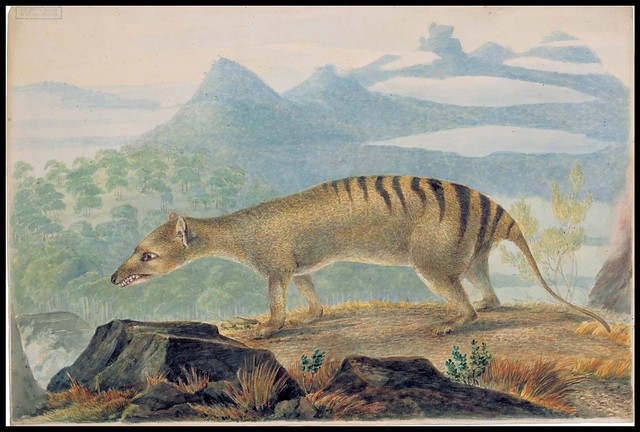
Thylacinus cynocephalus, Greek for "dog-headed pouched one", was the largest
known carnivorous marsupial of modern times. It is commonly known as the
Tasmanian tiger (because of its striped back) or the Tasmanian wolf. Native to
continental Australia, Tasmania and New Guinea, it is thought to have become
extinct in the 20th century. It was the last extant member of its family, Thylacinidae;
specimens of other members of the family have been found in the fossil record
dating back to the early Miocene.
Despite its official classification as extinct, sightings are still reported, though none
has been conclusively proven. The thylacine was one of only two marsupials to have
a pouch in both sexes (the other being the water opossum). The male thylacine had
a pouch that acted as a protective sheath, covering the male's external reproductive
organs while he ran through thick brush. It has been described as a formidable predator
because of its ability to survive and hunt prey in extremely sparsely populated areas.
Source: http://en.wikipedia.org/wiki/Thylacine
Plant Systematics Wall Chart Circa 1878
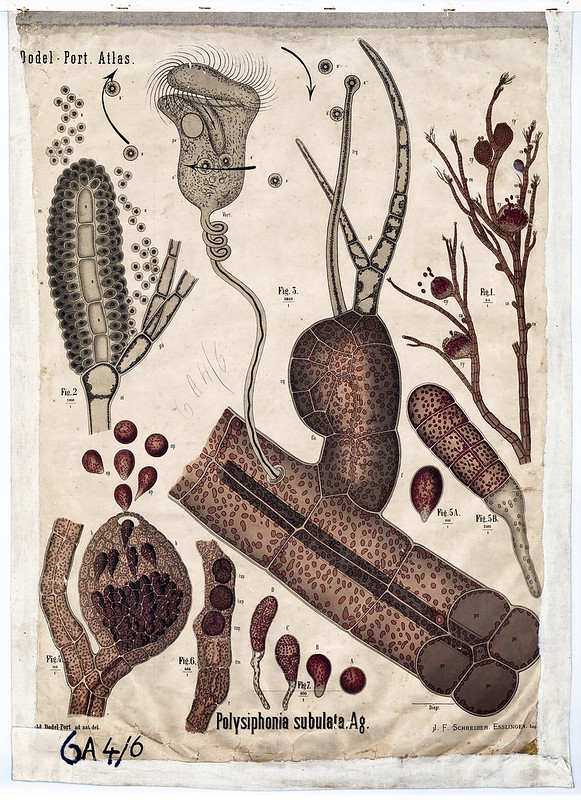
Polysiphonia Subulata (red algae genus)
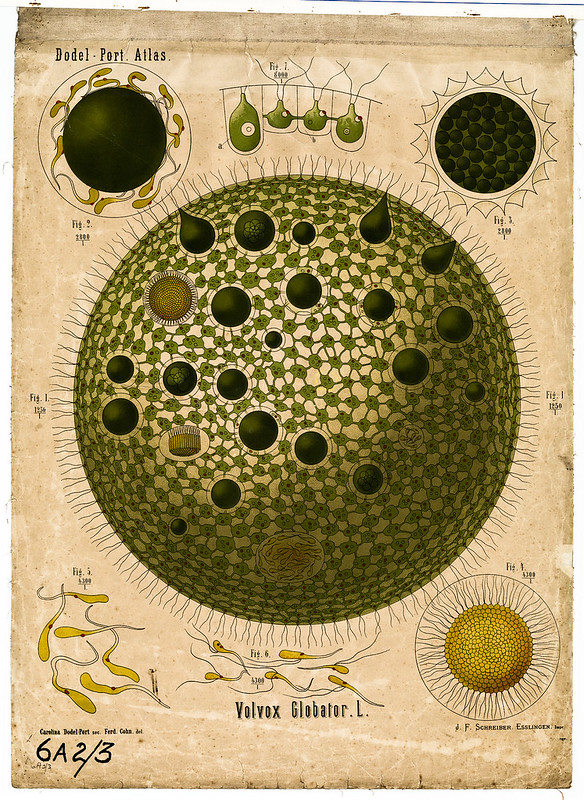
This shows the freshwater green alga Volvox globator. Many individual cells
live together forming a beautiful spherical colony. Some of them are specialized
for reproduction.
"Living nature is the best teacher and pedagogue; an artistic medium of
representation tries to replace nature and this can be possible in practice only
if the images are true to natural objects."
Source: http://bibliodyssey.blogspot.com/
Subscribe to:
Posts (Atom)